
A rising market is a dangerous place to make long-term decisions. When sales are plentiful and buyers are competing for everything listed, the quality of the agent matters less than their availability. Sellers had the ability to list with essentially anyone and obtain a result. Many sole operators thrived because individual energy and commitment were enough to generate strong results without the overhead of a team, an office, or a system.
That environment rewarded the decision to go it alone. It also disguised its limitations.
Because what felt like business growth was often just market growth with your name on it. The question was never whether you could sell in a strong market. Almost everyone could. The real question, the one that only a quieter market asks, is what your business looks like when the conditions stop doing half the work for you.
For many sole operators right now, the answer to that question is confronting.
Sellers are more intentional now. They are researching more carefully, comparing more thoroughly, and making decisions based on depth of service, perceived stability, and track record. Many of them, whether consciously or not, are gravitating toward agencies that feel like businesses rather than individuals.
That is not a commentary on your skill. It is a commentary on perception, and perception in a cautious market carries significant weight.
There is also the reality of what sole operation demands from you personally. Everything sits on your shoulders. Every call, every appraisal, every negotiation, every piece of administration, every marketing decision. There is no one to cover when you are sick, no one to share the mental load, no one to pick up the energy when yours dips. The freedom you sought when you launched has, for many, quietly transformed into a different kind of trap. You are not running a business. You are the business. And that is an exhausting place to be.
The loneliness is real too, even if it rarely gets named. Building something on your own means carrying the weight of it on your own. There are no colleagues to debrief with after a difficult client, no team energy to draw from on a slow week, no shared culture to come back to when the work gets hard.
You swapped one set of constraints for another. The question is whether the trade-off is still working in your favour.
A practice is built around a person. When that person is present, productive, and healthy, it generates income. When they are not, it doesn't. A practice can be very successful, but it cannot be scaled, and it cannot be sold for meaningful value, because without the person at its centre, there is nothing there.
A business is built around a system. It has a culture, a structure, a team, and a set of processes that operate independently of any single individual. It can grow beyond the capacity of one person. It can be operated at a reduced level of personal involvement. It can be sold. It can be passed on. It can become something greater than what one person could build alone.
Most sole operators have built a practice and called it a business. There is no shame in that. But if you are honest about what you want from the next decade of your career, the distinction matters.
Do you want to keep running as hard as you are running now, indefinitely, with no obvious exit and no safety net? Or do you want to build something that has genuine value, supports other people's livelihoods and growth, and eventually operates in a way that gives you back your time?
Those are different ambitions. They require different decisions.
This is where most sole operators hesitate, because the leap from individual operator to agency principal feels large and undefined. And without a clear picture of what the journey involves, it is easy to stay where you are.
So here is what building a genuine real estate business actually requires:
It starts with culture. Not a mission statement. The real, lived culture of how your business operates, what it stands for, how it treats its people and its clients, and what kind of environment you are deliberately creating. Culture is the foundation on which everything else is built, and it is far easier to build it from the beginning than to repair it after the fact.
It requires a recruitment and onboarding system. Not just hiring someone when you get busy and hoping they work out. A deliberate process for identifying the right people, bringing them into your business properly, and equipping them with the training, the data, and the support they need to become genuine contributors rather than expensive experiments.
That last point, data, is worth naming specifically. One of the most common reasons new salespeople fail in small agencies is that they are handed a phone and a target and left to generate their own pipeline from scratch. The best agencies understand that equipping their people with quality market data, a structured territory, and a system for working it is what separates a salesperson who performs from one who leaves after six months.
It requires financial structures. Commission models that reward performance while protecting the commercial health of the business. An understanding of your numbers, your margins, and the relationship between your team's productivity and your own income. Many sole operators who transition to running a team are surprised to discover that their personal income increases as their personal production decreases. That counterintuitive outcome is the result of leverage, and it is available to any principal willing to build the structure that makes it possible.
The best real estate agencies are not just commercially successful. They are genuinely good places to work. They attract talented people because their culture is visible and their leadership is real. They serve their communities with depth and consistency. They build reputations that outlast any individual's career. And they operate, ultimately, in a way that does not require their founder to be present in every transaction for the wheels to keep turning.
That is the true measure of a business. Not the income it generates when you are at full capacity, but what it produces when you step back.
If you built your brand on the belief that you were creating something lasting, now is the time to make that true.
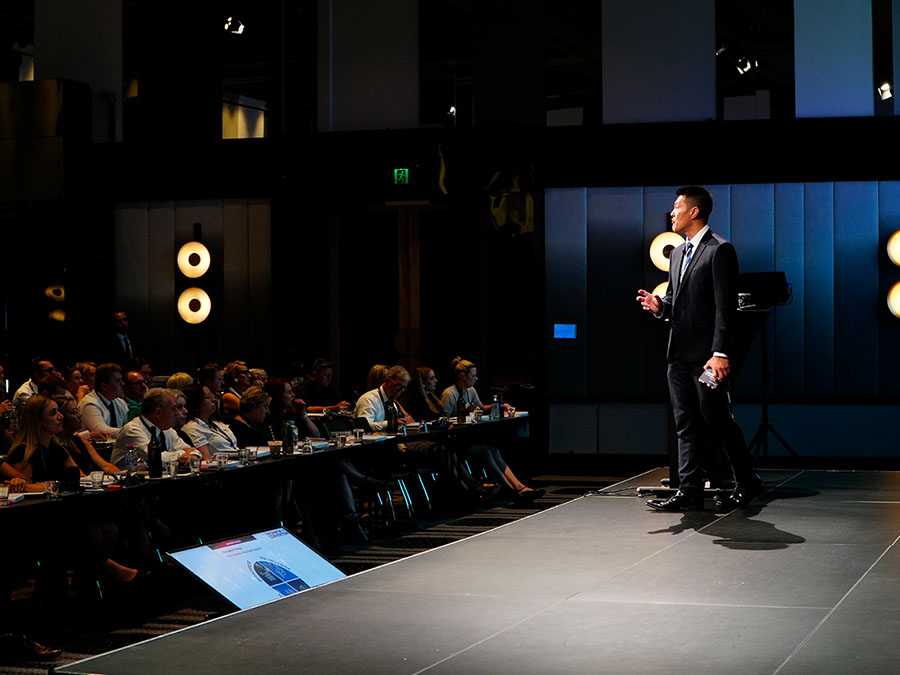
The Smartre Agency Seminar runs in Melbourne, July 19th – 23rd and it is built around exactly this transition.
Over five days, you will work through what a genuine real estate business looks like from the inside. The culture you need to build deliberately and early. The recruitment and onboarding systems that give new salespeople a real foundation rather than a baptism by fire. The data and support structures that allow your team members to prospect, list, and perform without starting from nothing. The financial controls and commission frameworks that make growth commercially sustainable.
And above all, the vision for what kind of business you are actually trying to build, and the roadmap for getting there.
Five days is a significant investment of time. Here are our commitments in return:
1. You will learn in these five days what most principals fail to learn across five years.
2. If the content is not of value, you leave without having to pay.
3. The seminar is structured to keep you productive throughout. This is not five days off. It is five days working on your business while continuing to work within it.
Tickets are $3,950 + GST for up to two people. Bring whoever you want alongside you for this next chapter.
The agency you imagined when you started out is still buildable. But it will not build itself.
Book your tickets to the Smartre Agency Seminar now. Reach out to the Smartre Training team and let's get you in the room.
A rising market is a dangerous place to make long-term decisions. When sales are plentiful and buyers are competing for everything listed, the quality of the agent matters less than their availability. Sellers had the ability to list with essentially anyone and obtain a result. Many sole operators thrived because individual energy and commitment were enough to generate strong results without the overhead of a team, an office, or a system.
That environment rewarded the decision to go it alone. It also disguised its limitations.
Because what felt like business growth was often just market growth with your name on it. The question was never whether you could sell in a strong market. Almost everyone could. The real question, the one that only a quieter market asks, is what your business looks like when the conditions stop doing half the work for you.
For many sole operators right now, the answer to that question is confronting.
Sellers are more intentional now. They are researching more carefully, comparing more thoroughly, and making decisions based on depth of service, perceived stability, and track record. Many of them, whether consciously or not, are gravitating toward agencies that feel like businesses rather than individuals.
That is not a commentary on your skill. It is a commentary on perception, and perception in a cautious market carries significant weight.
There is also the reality of what sole operation demands from you personally. Everything sits on your shoulders. Every call, every appraisal, every negotiation, every piece of administration, every marketing decision. There is no one to cover when you are sick, no one to share the mental load, no one to pick up the energy when yours dips. The freedom you sought when you launched has, for many, quietly transformed into a different kind of trap. You are not running a business. You are the business. And that is an exhausting place to be.
The loneliness is real too, even if it rarely gets named. Building something on your own means carrying the weight of it on your own. There are no colleagues to debrief with after a difficult client, no team energy to draw from on a slow week, no shared culture to come back to when the work gets hard.
You swapped one set of constraints for another. The question is whether the trade-off is still working in your favour.
A practice is built around a person. When that person is present, productive, and healthy, it generates income. When they are not, it doesn't. A practice can be very successful, but it cannot be scaled, and it cannot be sold for meaningful value, because without the person at its centre, there is nothing there.
A business is built around a system. It has a culture, a structure, a team, and a set of processes that operate independently of any single individual. It can grow beyond the capacity of one person. It can be operated at a reduced level of personal involvement. It can be sold. It can be passed on. It can become something greater than what one person could build alone.
Most sole operators have built a practice and called it a business. There is no shame in that. But if you are honest about what you want from the next decade of your career, the distinction matters.
Do you want to keep running as hard as you are running now, indefinitely, with no obvious exit and no safety net? Or do you want to build something that has genuine value, supports other people's livelihoods and growth, and eventually operates in a way that gives you back your time?
Those are different ambitions. They require different decisions.
This is where most sole operators hesitate, because the leap from individual operator to agency principal feels large and undefined. And without a clear picture of what the journey involves, it is easy to stay where you are.
So here is what building a genuine real estate business actually requires:
It starts with culture. Not a mission statement. The real, lived culture of how your business operates, what it stands for, how it treats its people and its clients, and what kind of environment you are deliberately creating. Culture is the foundation on which everything else is built, and it is far easier to build it from the beginning than to repair it after the fact.
It requires a recruitment and onboarding system. Not just hiring someone when you get busy and hoping they work out. A deliberate process for identifying the right people, bringing them into your business properly, and equipping them with the training, the data, and the support they need to become genuine contributors rather than expensive experiments.
That last point, data, is worth naming specifically. One of the most common reasons new salespeople fail in small agencies is that they are handed a phone and a target and left to generate their own pipeline from scratch. The best agencies understand that equipping their people with quality market data, a structured territory, and a system for working it is what separates a salesperson who performs from one who leaves after six months.
It requires financial structures. Commission models that reward performance while protecting the commercial health of the business. An understanding of your numbers, your margins, and the relationship between your team's productivity and your own income. Many sole operators who transition to running a team are surprised to discover that their personal income increases as their personal production decreases. That counterintuitive outcome is the result of leverage, and it is available to any principal willing to build the structure that makes it possible.
The best real estate agencies are not just commercially successful. They are genuinely good places to work. They attract talented people because their culture is visible and their leadership is real. They serve their communities with depth and consistency. They build reputations that outlast any individual's career. And they operate, ultimately, in a way that does not require their founder to be present in every transaction for the wheels to keep turning.
That is the true measure of a business. Not the income it generates when you are at full capacity, but what it produces when you step back.
If you built your brand on the belief that you were creating something lasting, now is the time to make that true.
The Smartre Agency Seminar runs in Melbourne, July 19th – 23rd and it is built around exactly this transition.
Over five days, you will work through what a genuine real estate business looks like from the inside. The culture you need to build deliberately and early. The recruitment and onboarding systems that give new salespeople a real foundation rather than a baptism by fire. The data and support structures that allow your team members to prospect, list, and perform without starting from nothing. The financial controls and commission frameworks that make growth commercially sustainable.
And above all, the vision for what kind of business you are actually trying to build, and the roadmap for getting there.
Five days is a significant investment of time. Here are our commitments in return:
1. You will learn in these five days what most principals fail to learn across five years.
2. If the content is not of value, you leave without having to pay.
3. The seminar is structured to keep you productive throughout. This is not five days off. It is five days working on your business while continuing to work within it.
Tickets are $3,950 + GST for up to two people. Bring whoever you want alongside you for this next chapter.
The agency you imagined when you started out is still buildable. But it will not build itself.
Book your tickets to the Smartre Agency Seminar now. Reach out to the Smartre Training team and let's get you in the room.






.png)